
PDRN Skincare Guide · Routines
Skin type before concerns: how to build a PDRN routine
Skin that turns shiny by afternoon and skin that feels tight soon after cleansing won’t feel the same even under the same cream. Here’s how to identify your skin type first, then build a routine that takes both your type and your concerns into account.
The short answer
A routine suits your skin better when it’s based on your skin type more than on your concerns. That’s because the same concern often stems from sebum and pores in oily skin, but from water escaping too easily in dry or sensitive skin.
For oily skin, take away excess oil; for dry skin, replenish missing water and oil; for sensitive skin, start by cutting down the number of products you apply. Then choose PDRN products by whether their texture and other ingredients fit that approach.
Start by identifying your skin type
The American Academy of Dermatology broadly divides skin into oily, dry, combination, normal and sensitive types.1 A common way to gauge your type at home: wash your face with a gentle cleanser, leave it bare for about 30 minutes, then check your forehead, nose and cheeks in turn.
| Type | 30 minutes after cleansing | How it usually feels |
|---|---|---|
| Oily | Shiny all over: forehead, nose and cheeks | Makeup breaks down by afternoon and pores are noticeable |
| Combination | Only the forehead and nose are shiny; cheeks look matte or feel tight | Different areas need different care |
| Dry | The whole face feels tight, sometimes with visible flaking | Feels uncomfortable unless you apply something right after cleansing |
| Normal | Neither very shiny nor very tight | Changes slightly, and only with the seasons |
| Sensitive | May feel tight or prickly | New products, fragrance or exfoliating products make it sting or burn |
Skin type isn’t fixed. It can change with the seasons, age, your living environment and the products you use, so check again whenever the seasons change. If you find it hard to judge for yourself, it’s a good idea to have a dermatologist confirm it.
Why the same concern can start in different places
Most skincare concerns come down to a few: shine and pores, dullness and dark spots, and fine lines. But a concern with the same name can start from a different place depending on skin type. Take visible pores: in oily skin, they look that way because of excess sebum, while in dry skin, dryness can make the skin’s texture look rough and the pores stand out. And on days when your skin is dry or sensitive, an ingredient that’s usually fine can sting.
So the care each type needs can point in opposite directions. Oily skin calls for taking away excess oil; dry skin calls for replenishing missing water and oil. For sensitive skin, cutting back on anything that might irritate comes before adding something new. Copying someone else’s routine without considering your skin type may leave you less satisfied than you hoped, or even make your skin less comfortable.
Skin type × concern at a glance
The table below sets skin types (rows) against concerns (columns) and summarizes the approach and the ingredients to look for. We cover what each ingredient does in more detail in Ingredients to use with PDRN.
| Skin type | Shine and pores | Dullness and dark spots | Fine lines |
|---|---|---|---|
| Oily and combination | Cleanse thoroughly, moisturize lightlyA cleanser with salicylic acid (BHA), plus a rinse-off clay mask once or twice a week. Gel and serum textures rather than oils. | Light serum and sun protectionA serum with niacinamide and a lightweight sunscreen. | Generous serum, thin creamFocus on a serum with adenosine. A thin layer of cream in the evening. |
| Dry | Replenish rather than stripExfoliate no more than once a week. Moisturize right after cleansing to reduce dryness first. | Moisturize firstDry skin tends to look dull. A cream-texture product with niacinamide. | Panthenol and ceramides, plus adenosineBuild on a moisturizing cream; introduce retinol slowly, starting at a low strength. |
| Sensitive | Cleanse gently and brieflyAvoid harsh cleansers and frequent exfoliation. Keep clay masks short and occasional. | Sun protection firstStart with gentle formulas rather than acidic vitamin C. One new product at a time. | Fewer ingredientsStart with a moisturizer containing adenosine rather than retinol, and with fragrance-free products. |
Sample routines by skin type
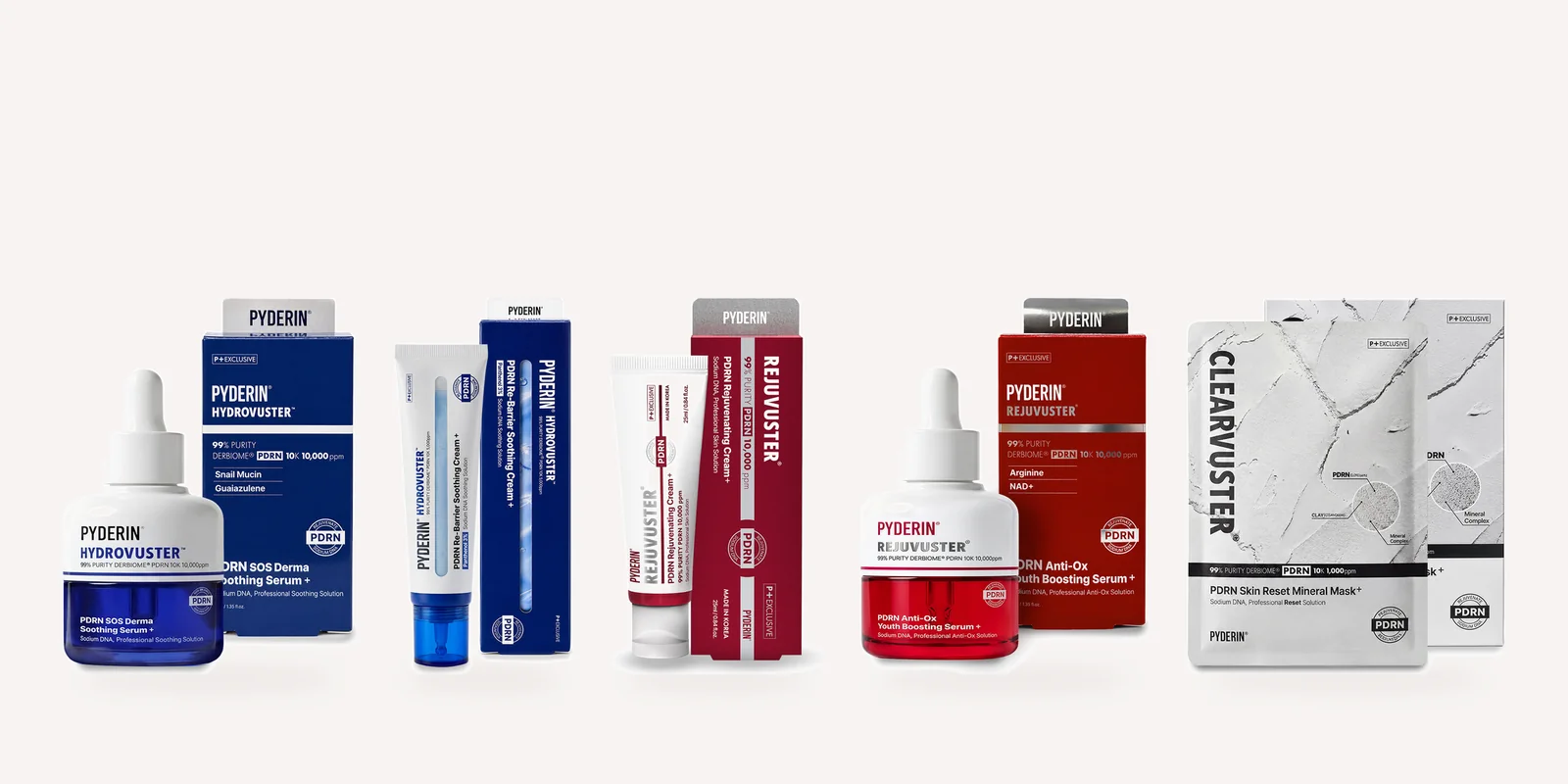
These examples use PYDERIN products. You don’t need every step; trimming the routine to fit your single biggest concern right now is enough. The same principles apply to products from other brands, so slot what you already have into the same steps based on texture and the other ingredients. In Korea, REJUVUSTER, HYDROVUSTER and CLEARVUSTER are sold at partner pharmacies, and the PYDERIN PDRN Lift line and Bubble Cleanser at partner clinics. If you shop only at pharmacies, skip the toner in the oily-skin routine and use a gentle foaming cleanser for your evening cleanse instead.
Oily and combination
For shine and pores
Morning
- Lukewarm water or a gentle foaming cleanser
 PYDERIN PDRN Lift Toner
 HYDROVUSTER PDRN SOS Derma Soothing Serum
- On days your skin feels tight, a light gel moisturizer
- Lightweight sunscreen
Evening
 PYDERIN PDRN Bubble Cleanser
- Toner
- Serum, plus a thin layer of cream only where skin feels tight
1–2 times a week

Dry
For tightness and dryness
Morning
- Rinse with water
 REJUVUSTER PDRN Anti-Ox Youth Booster Serum
 REJUVUSTER PDRN Rejuvenating Cream
- Sunscreen
Evening
- Gentle cleanser
- Serum
- Cream, applied more generously than in the morning
1–2 times a week

Sensitive
When even mild irritation makes your skin uncomfortable
Morning
- Rinse with water
 HYDROVUSTER PDRN Re-Barrier Soothing Cream
- Sunscreen
Evening
- Gentle cleanser
- Re-Barrier Soothing Cream
Once a week, only on days your skin feels comfortable
The sensitive-skin routine includes only products with no fragrance on their ingredient lists. If you have combination skin, use the oily-skin routine as your base and add a little more cream to tight cheeks. Oily skin needs moisture too: choose a light, oil-free moisturizer formulated not to clog pores. A cleanser that’s too harsh can irritate the skin and even make it shinier, so a gentle foaming cleanser is the better choice.2
When adding a new product
- One at a time. If you change several products at once, you can’t tell which ones suit you and which don’t.
- Small area first. Apply a coin-sized amount to the inside of your arm or the crook of your elbow twice a day for 7–10 days, and use the product on your face only if there’s no reaction.3
- Don’t rush to judge. You can tell right away how a product feels, but it takes a few weeks of use to know whether a routine suits your skin. Stick with the same routine for 2–4 weeks and keep notes on how your skin is doing.
- Avoid clogging pores. If your skin is oily or combination, check that a product is low in oil and formulated not to clog pores.2
Signs to see a doctor before changing cosmetics
If you notice any of the following, it’s better to see a dermatologist before you change your cosmetics.
- Painful red lumps that keep coming back or leave marks
- A face that easily feels hot and stays red for more than a few weeks
- Intense itching, or skin that oozes and flakes
- A mole or patch of pigment that suddenly grows or changes shape or color
- Swelling or hives after using a new product (stop using it right away)
Frequently asked questions
Which routine should I follow for combination skin?
Care for each zone differently: keep it light on a shiny forehead and nose, as in the oily-skin routine, and more generous on tight cheeks, as in the dry-skin routine. Simply varying how much of the same cream you apply to each area makes a difference.
Does oily skin need a cream too?
It still needs moisture, because oil and water are not the same thing. Choose a light moisturizer that’s low in oil, and if cream feels heavy, a serum or gel texture can take its place.
Can my skin type change?
Yes, it can. It varies with the seasons, age, your living environment and the products you use. Whenever the seasons change, check your skin again 30 minutes after cleansing.
Can I use PDRN products on sensitive skin?
The fact that a product contains PDRN doesn’t tell you whether it suits sensitive skin. Formulas differ from product to product, so check the full ingredient list, and be especially careful to try products with fragrance on a small area before using them. If any discomfort develops, stop using the product right away.
Find PYDERIN products at partner pharmacies and clinics in Korea
View all products Find partner pharmacies Find partner clinicsReferences
These are general guidance resources on skin types and product use. Product details are based on each product’s ingredient list.
This article is general information on using cosmetics that suit your skin type. It is not a substitute for the diagnosis or treatment of any condition. If you have a skin problem, consult a dermatologist.