
PDRN Skincare Guide · Ingredient pairing
PDRN cream: what to use with it and what to use separately
Look at the ingredient list of a PDRN cream and you’ll see that PDRN is just one of dozens of ingredients. What else is in the formula shapes what each PDRN cream is suited for. Here are the ingredients worth looking for by skin concern, and the ones better used at a different time.
The short answer
When you use a PDRN product with other products, it’s the other ingredients, more than the PDRN, that you need to watch. Ingredients that can be irritating on their own, such as retinol and exfoliating ingredients, are safer used at a different time of day or on different days.
Starting from your main concern makes choosing easier. For dryness, look first at moisturizers with panthenol and ceramides. For dullness, look at brightening functional cosmetics, and for fine lines, at wrinkle-improvement functional cosmetics (functional cosmetics are a Korean regulatory category). Niacinamide and adenosine are the best-known ingredients listed for these two categories in a notice from Korea’s Ministry of Food and Drug Safety (MFDS).
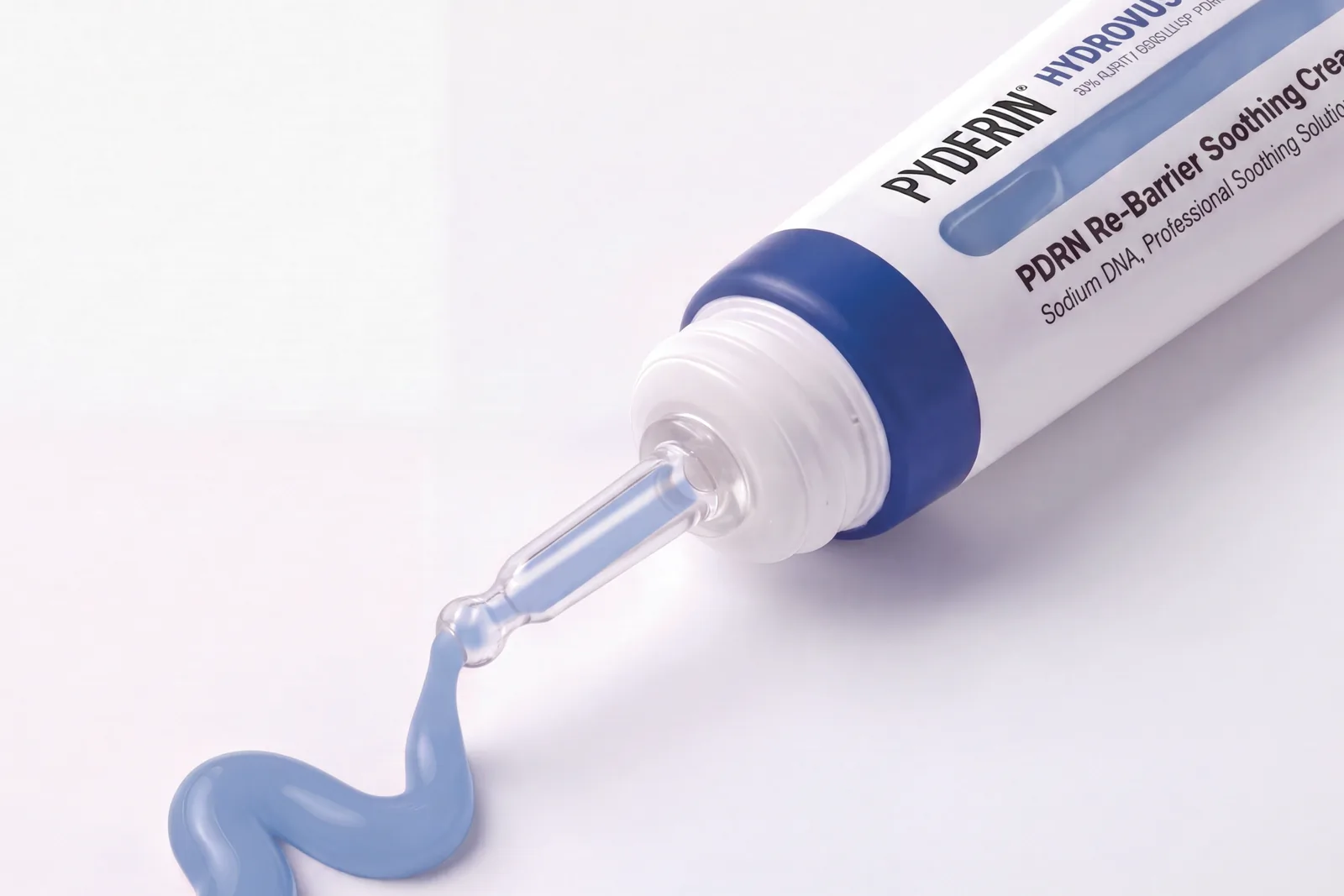
Look at PDRN products as combinations
In a serum whose ingredient list says “Sodium DNA (100 ppm),” DNA makes up 0.01% of the product’s weight. What fills the other 99.99% determines how it feels on the skin, how well it moisturizes and how irritating it may be. In Korea, functional claims such as wrinkle improvement or brightening are based not on PDRN but on functional ingredients listed in the MFDS notice and on each product’s review or report. So when choosing a PDRN product, look less at whether it contains PDRN and more at what comes with the PDRN. We explain how to read the content figures in How to read the numbers on a PDRN label.
Dry and tight
Ingredients that hold on to water and keep skin hydrated longer
- Panthenol
- Ceramides
- Cholesterol & fatty acids
- Squalane
- Ectoin
- Hyaluronic acid
- Arginine
Dullness and dark spots
Brightening ingredient listed by Korea’s MFDS, plus sun protection
- Niacinamide
- Sunscreen
Fine lines
Wrinkle-improvement ingredients listed by Korea’s MFDS
- Adenosine
- Retinol
When skin is sensitive
Take away rather than add
- Check for fragrance
- Pause exfoliants
- Panthenol
- Ceramides
If your skin feels dry and tight, start with panthenol and ceramides
Panthenol is converted in the skin into pantothenic acid (vitamin B5). It attracts water, which is why it’s widely used in moisturizers, and it has been used on the skin for more than 70 years.1 HYDROVUSTER PDRN Re-Barrier Soothing Cream contains 3% (30,000 ppm) panthenol, and this content is also stated on its ingredient list.
Ceramides are one of three types of lipid, along with cholesterol and fatty acids, that fill the spaces between cells in the stratum corneum.2 That’s why you often see cholesterol or fatty acids next to a ceramide such as ceramide NP on an ingredient list. Keep in mind, though, that ingredients near the end of the list may be present in very small amounts.
Squalane is an oil made by converting squalene, which is also found in sebum, into a form that doesn’t oxidize easily; it helps prevent water loss without feeling heavy. Ectoin, which microorganisms living in very salty environments produce to protect themselves, is also used in cosmetics as a moisturizing ingredient. Arginine, which Korean ingredient lists spell 알지닌, is one of the amino acids that make up the natural moisturizing factor the skin produces on its own.3
If dullness and dark spots concern you, look to niacinamide
If dullness is your concern, the first ingredient to look at is niacinamide, a form of vitamin B3. In Korea, the MFDS lists it as a brightening functional ingredient, and products containing 2–5% can carry the claim “helps brighten the skin” after review or reporting.4
Not every product with niacinamide on its ingredient list is a brightening functional cosmetic, though. Check the package for the “functional cosmetic” marking and the claim wording. Sun protection is essential when dark spots are a concern, so wear sunscreen consistently during the day.
If fine lines bother you, start with adenosine
Adenosine is a wrinkle-improvement functional ingredient listed by Korea’s MFDS. Products containing 0.04% can carry the claim “helps improve wrinkles” after review or reporting.4
Retinol is also on Korea’s list of wrinkle-improvement ingredients, but skin is easily irritated when you first start using it, so how you use it matters. The American Academy of Dermatology recommends starting with a low-strength product applied only at night every other day, increasing use gradually and pairing it with a moisturizer and daytime sun protection.5 We cover how to use it with PDRN products below, under “Ingredients best used at separate times.”
Peptides often appear in firming products, but the word is a catch-all for small chains of a few amino acids, so each type has different properties and a different body of research. Rather than going by “contains peptides,” check the specific name on the ingredient list, such as acetyl hexapeptide-8.
When your skin is sensitive, cut back and add one at a time
When your skin is sensitive, removing potential irritants comes before adding good ingredients. Don’t switch several products at once; introduce them one at a time, and before using a new product on your face, apply it to a small area such as the inside of your arm twice a day for 7–10 days.6 Take a break from products with exfoliating ingredients during this time.
If you’re sensitive to scent, look for “fragrance” on the ingredient list. Even within the same HYDROVUSTER line, the PDRN SOS Derma Soothing Serum lists fragrance among its ingredients, while the PDRN Re-Barrier Soothing Cream does not. Products with similar names can have different ingredient lists.
Ingredients best used at separate times
The ingredients below can be irritating on their own, so your skin will be more comfortable if you use them at different times from your PDRN products.
| Ingredient | What to watch for | How to space them out |
|---|---|---|
| Retinol, retinal | Irritation such as stinging, dryness and flaking | Start at night only, every other day, and increase gradually. Finish with a PDRN cream on top as your moisturizing step. |
| AHA, BHA, PHA | They remove dead skin cells, so skin can become sensitive | Use them on different days from retinol. Products that stay on the skin only briefly, such as cleansers or rinse-off masks used once or twice a week, are gentler. |
| Vitamin C (ascorbic acid) | Acidic formulas can sting on sensitive days | Use as a serum in the morning and finish with sunscreen. If it stings, skip it for a day and just moisturize. |
| Topical medication from your doctor | The medication’s directions come first | Follow your healthcare provider’s instructions on order and timing, and fit your cosmetics around them. |
Order of application
The American Academy of Dermatology recommends applying products in this order: cleanser, then any topical medication or targeted product, then moisturizer and sunscreen.7 If you add serums in between, apply thinner textures first and creams last. Put a PDRN product where its texture belongs: a serum at the serum step, a cream at the cream step.
- Cleanse. Wash with a gentle cleanser and pat your skin dry.
- Toner. Only if you use one. Save exfoliating toners for days you don’t use retinol.
- Serum or ampoule. Apply thin textures such as a PDRN serum or a niacinamide serum.
- Cream. Finish by moisturizing. On dry days, apply a little more.
- Sunscreen. The last step in the morning. Don’t skip it even on days you spend a long time near a window.
Combinations in PYDERIN products
Below are the key ingredients you can find alongside PDRN (Sodium DNA) on the ingredient lists of PYDERIN products. The products are sold through different channels, so check the sales channel shown on each card as well.
-
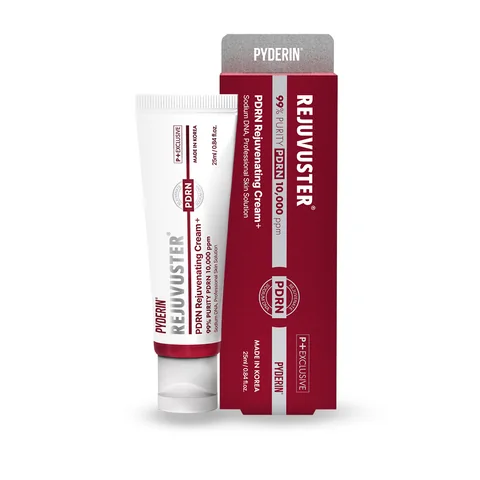 REJUVUSTER · Partner pharmacies (Korea)
REJUVUSTER PDRN Rejuvenating Cream
PDRN + panthenol + ceramide NP and cholesterol + ectoin
View product
REJUVUSTER · Partner pharmacies (Korea)
REJUVUSTER PDRN Rejuvenating Cream
PDRN + panthenol + ceramide NP and cholesterol + ectoin
View product
-
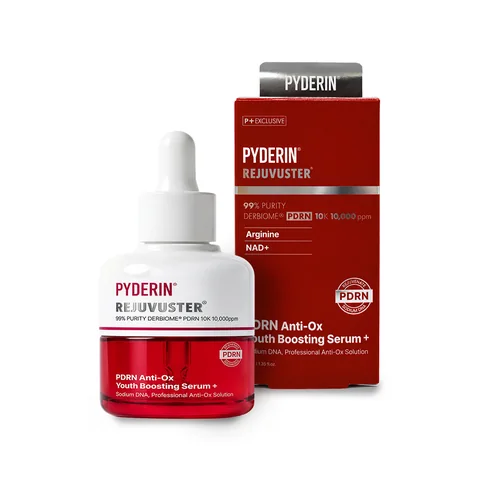 REJUVUSTER · Partner pharmacies (Korea)
PYDERIN REJUVUSTER PDRN Anti-Ox Youth Booster Serum
PDRN + arginine + panthenol + sodium hyaluronate + ceramide NP
View product
REJUVUSTER · Partner pharmacies (Korea)
PYDERIN REJUVUSTER PDRN Anti-Ox Youth Booster Serum
PDRN + arginine + panthenol + sodium hyaluronate + ceramide NP
View product
-
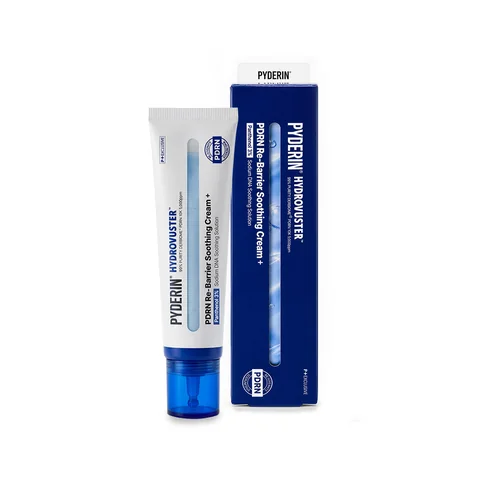 HYDROVUSTER · Partner pharmacies (Korea)
PYDERIN HYDROVUSTER PDRN Re-Barrier Soothing Cream
PDRN + 3% panthenol + ceramide NP and cholesterol + squalane + sodium guaiazulene sulfonate
View product
HYDROVUSTER · Partner pharmacies (Korea)
PYDERIN HYDROVUSTER PDRN Re-Barrier Soothing Cream
PDRN + 3% panthenol + ceramide NP and cholesterol + squalane + sodium guaiazulene sulfonate
View product
-
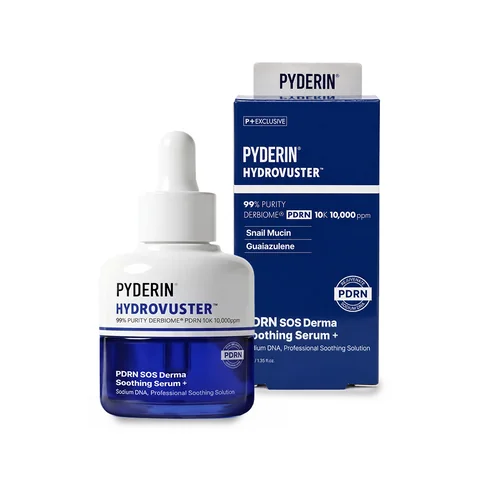 HYDROVUSTER · Partner pharmacies (Korea)
PYDERIN HYDROVUSTER PDRN SOS Derma Soothing Serum
PDRN + snail secretion filtrate + guaiazulene + centella asiatica extract. The ingredient list includes fragrance
View product
HYDROVUSTER · Partner pharmacies (Korea)
PYDERIN HYDROVUSTER PDRN SOS Derma Soothing Serum
PDRN + snail secretion filtrate + guaiazulene + centella asiatica extract. The ingredient list includes fragrance
View product
-
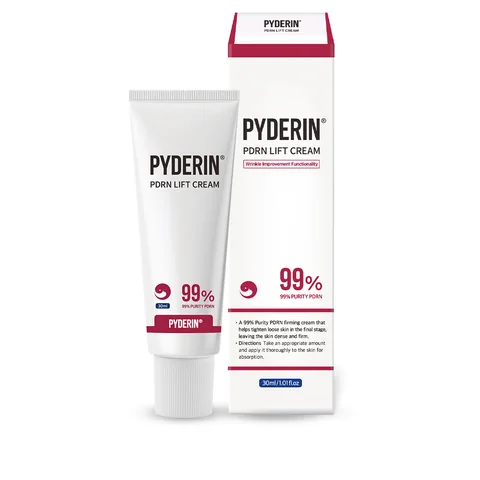 PYDERIN · Partner clinics (Korea)
PDRN Lift Cream
PDRN + panthenol + 7 types of collagen + acetyl hexapeptide-8. The ingredient list includes fragrance
View product
PYDERIN · Partner clinics (Korea)
PDRN Lift Cream
PDRN + panthenol + 7 types of collagen + acetyl hexapeptide-8. The ingredient list includes fragrance
View product
-
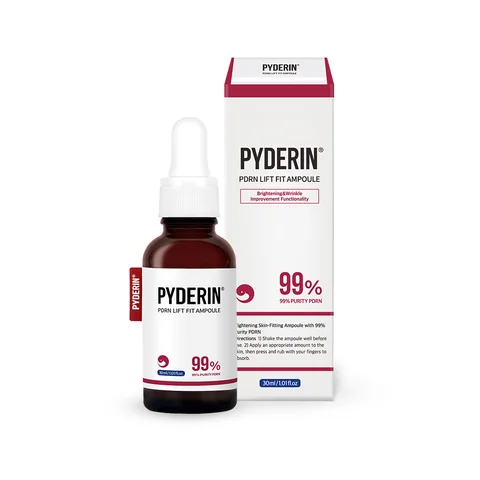 PYDERIN · Partner clinics (Korea)
PDRN Lift Fit Ampoule
PDRN + panthenol + squalane + centella asiatica extract + 9 types of peptides. The ingredient list includes salicylic acid and hydrolyzed sponge, so use it on different days from retinol
View product
PYDERIN · Partner clinics (Korea)
PDRN Lift Fit Ampoule
PDRN + panthenol + squalane + centella asiatica extract + 9 types of peptides. The ingredient list includes salicylic acid and hydrolyzed sponge, so use it on different days from retinol
View product
Frequently asked questions
Can I use PDRN with retinol?
Yes, you can use them together. A sensible approach is to start retinol at a low strength, at night every other day, and apply a PDRN cream over it as your moisturizing step. If stinging or flaking gets worse, use retinol on fewer days.
Can I use PDRN with vitamin C?
Apply your vitamin C serum in the morning and use a PDRN cream over it as the moisturizing step. On days the vitamin C serum stings, skip it for a day and just moisturize.
Do I need both a PDRN serum and a PDRN cream?
No. If your skin is oily, a serum alone may be enough; if it’s dry, a cream alone may do. Rather than adding steps, use one texture that suits your skin, and use it consistently.
Can I use niacinamide and PDRN together?
Yes, you can use them together in the same routine. However, we found no study that compared using the two together with using each on its own to see whether the effects add up. In Korea, brightening claims are made product by product after review or reporting, so the basics are to check the package labeling and to use the product consistently along with sun protection.
References
These sources cover the general properties of each ingredient and labeling rules. They are not studies of PYDERIN finished products; a product’s functional claims are based on that product’s review or report in Korea.
- Proksch E, de Bony R, Trapp S, Boudon S. Topical use of dexpanthenol: a 70th anniversary article. J Dermatolog Treat. 2017;28(8):766–773. doi:10.1080/09546634.2017.1325310
- Man MQ, Feingold KR, Thornfeldt CR, Elias PM. Optimization of physiological lipid mixtures for barrier repair. J Invest Dermatol. 1996;106(5):1096–1101. doi:10.1111/1523-1747.ep12340135
- Caspers PJ, Lucassen GW, Carter EA, Bruining HA, Puppels GJ. In vivo confocal Raman microspectroscopy of the skin: noninvasive determination of molecular concentration profiles. J Invest Dermatol. 2001;116(3):434–442. doi:10.1046/j.1523-1747.2001.01258.x
- Ministry of Food and Drug Safety (MFDS), Korea. Notice 「기능성화장품 심사에 관한 규정」 [별표 4] 자료 제출이 생략되는 기능성화장품의 종류 [Regulation on the Review of Functional Cosmetics, Annex 4: Types of functional cosmetics exempt from data submission]. law.go.kr
- American Academy of Dermatology. Retinoid or retinol? aad.org
- American Academy of Dermatology. How to test skin care products. aad.org
- American Academy of Dermatology. Should I apply my skin care products in a certain order? aad.org
This article is general information to help you choose cosmetic ingredients. If you are being treated for a skin condition or use a prescribed medication, talk to your healthcare provider first.