
PDRN Skincare Guide · Ingredient labeling
What do 10,000 ppm, 99% purity and 97 kDa on a PDRN label tell you?
PDRN cosmetics are unusually full of numbers. With PYDERIN product labels and our raw material’s certificate of analysis laid out side by side, we explain what each figure measures and why a single product can state its PDRN content in two different ways.
The short answer
The numbers on a PDRN label describe three separate things: ppm tells you how much was added, purity how clean the raw material is and kDa how big the fragments are.
But ppm can be given either as the amount of PDRN raw material added (raw-material basis) or as the amount of DNA in the finished product, listed as Sodium DNA (finished-product basis). To compare products, look at the finished-product figure on the ingredient list.
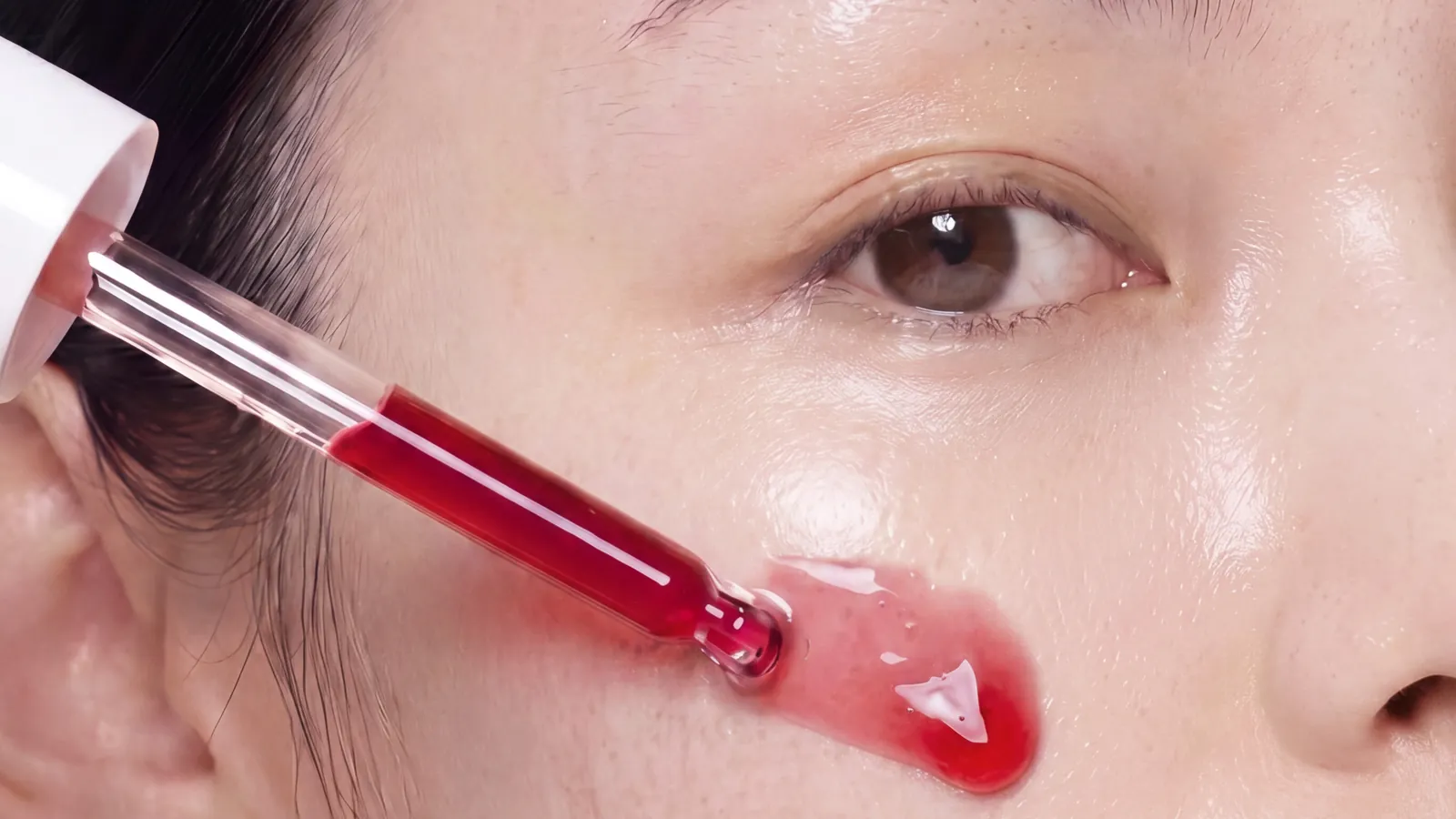
Read ppm as a percentage
The abbreviation ppm stands for parts per million. One ppm is one part in a million, so 10,000 ppm equals 1%. In 1 g of a cosmetic, 10,000 ppm is 10 mg and 100 ppm is 0.1 mg. The same amount looks much bigger written in ppm than as a percentage. When you see ppm on a label, start by converting it to a percentage.
ppm converted to percent and to weight per gram
- 100 ppm0.01%0.1 mg in 1 g
- 1,000 ppm0.1%1 mg in 1 g
- 5,000 ppm0.5%5 mg in 1 g
- 10,000 ppm1%10 mg in 1 g
- 20,000 ppm2%20 mg in 1 g
Raw-material basis vs. finished-product basis
The label of PYDERIN HYDROVUSTER PDRN SOS Derma Soothing Serum shows the difference right away. The front of the package says “DERBIOME® PDRN 10K 10,000 ppm,” while the ingredient list says “Sodium DNA (100 ppm).” Both numbers are about PDRN, yet they differ by a factor of 100. That is because they measure different things.
The 10,000 ppm on the front is the amount of raw material used: a PDRN raw material called “DERBIOME® PDRN 10K” makes up 1% of the product’s weight. That raw material is not pure DNA; it comes as DNA diluted to a set concentration. Count only the DNA it contains and list it under its ingredient name, Sodium DNA, and you get 100 ppm on a finished-product basis.
Front of package
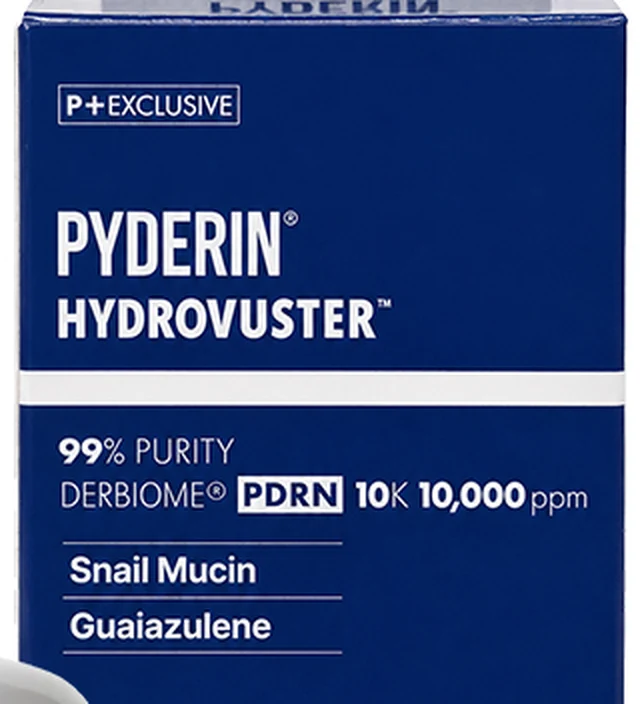
Raw material added. The PDRN raw material makes up 1% of the product’s weight.
Ingredient list
Finished-product basis. The amount of DNA itself in the finished product: 0.01% of the product’s weight.
In Korea, the Ministry of Food and Drug Safety (MFDS) guidelines on cosmetic labeling and advertising say that when a product states how much of an extract it contains, the figure should be the actual amount, excluding the diluting solvent.1 When a raw material is supplied as diluted DNA, like the one PYDERIN uses, the amount of raw material added does not tell you how much DNA is in the product. And because DNA concentration varies from one raw material to another, even the amounts added cannot be compared directly. As with the PYDERIN serum, the two numbers can differ 100-fold on the same product, and the gap can be even wider depending on the raw material’s DNA concentration.
To find PDRN on an ingredient list, look not for “PDRN” but for names such as Sodium DNA or Hydrolyzed DNA. Ingredients are generally listed from the largest amount to the smallest, but under Korean labeling rules, ingredients at 1% or less, as well as fragrances and colorants, may be listed in any order.2 So for an ingredient used in small amounts, like PDRN, its position on the list tells you little about how much is there. If the content is given in parentheses, use that number to compare products.
| Product | PDRN raw material added | Sodium DNA on ingredient list (finished-product basis) |
|---|---|---|
| HYDROVUSTER PDRN SOS Derma Soothing Serum | 10,000 ppm | 100 ppm |
| REJUVUSTER PDRN Anti-Ox Youth Booster Serum | 10,000 ppm | 100 ppm |
| HYDROVUSTER PDRN Re-Barrier Soothing Cream | 5,000 ppm | 50 ppm |
| CLEARVUSTER PDRN Skin Reset Mineral Mask | 1,000 ppm | 10 ppm |
The products in the table show the amount of PDRN raw material on the package and in the product information, and the finished-product Sodium DNA content in parentheses on the ingredient list. If a product’s ingredient list gives no content, ask the retailer or manufacturer which basis its number uses.
What does 99% purity measure?
“99% purity PDRN cream” does not mean the cream is 99% PDRN. When DNA is extracted from salmon, other substances such as proteins and RNA come out with it; purity is the share of the purified DNA material that is actually DNA once those impurities are excluded. It is a different number from both the DNA concentration of the raw-material solution and the content in the product.
A common way to gauge purity is the A260/A280 ratio. DNA strongly absorbs ultraviolet light at a wavelength of 260 nm, and protein at 280 nm. When the ratio of absorbance at these two wavelengths is around 1.8, the DNA is generally considered pure; a noticeably lower ratio raises the possibility that other substances, such as protein, are mixed in.3 The certificate of analysis for PYDERIN’s PDRN raw material gives a specification of 1.7–1.9 for this ratio and a measured result of 1.78.
With lower purity, the same amount of raw material delivers correspondingly less actual DNA, and leftover impurities can make quality vary from one production batch (lot) to the next. Consumers can check raw-material quality for themselves only when purity is stated as a number and the test results behind that number are published as well.
kDa and bp: two units for size
Molecular size is given in two units: kDa (kilodaltons) for weight and bp (base pairs) for the length of the DNA. Each base pair of double-stranded DNA weighs about 650–660 daltons, so 150 bp is about 97–99 kDa.4 The “97 kDa” in PYDERIN’s product information is a representative value: the 150 bp average on the published lot’s certificate of analysis, converted at 650 daltons per base pair (97.5 kDa).
Because PDRN is a mixture of DNA fragments of different lengths, don’t overlook the word “average.” The specification of 30–200 kDa (about 50–300 bp) on the certificate means a lot passes if its average molecular weight falls within that range, and the measured value for the published lot is 150 bp (about 97 kDa). The specification covers the average only, not the length of each fragment, so the raw material also contains fragments shorter or longer than that range, and the average can vary from lot to lot within the specification. Compared with the 50–1,500 kDa often given for PDRN in the research literature, the average of PYDERIN’s raw material is on the small side.5 Next to 500 daltons, the threshold for the skin barrier, though, it is still a large molecule.
Size is usually checked by electrophoresis. DNA is loaded onto a gel and an electric current is applied; shorter fragments move faster, and the size distribution is read by running the sample alongside reference DNA of known lengths. We look at what this size means for absorption in a separate article, Does PDRN cream absorb into the skin?
Reading a raw material’s certificate of analysis
A certificate of analysis (CoA) is a document in which a raw-material supplier records the results of testing one batch (lot) of material. The specification is the acceptable range; the result is the value actually measured. Here is a summary of the certificate of analysis and certificate of origin for the PDRN raw material PYDERIN uses.
| Item | Specification or details | Result |
|---|---|---|
| Country of extraction and source | Extracted in the Republic of Korea · testis or semen of chum salmon (Oncorhynchus keta) | Per certificate |
| Average molecular weight | Spec 30–200 kDa (about 50–300 bp) | 150 bp (~97 kDa) |
| A260/A280 absorbance ratio | Spec 1.7–1.9 | 1.78 |
| DNA (PDRN) purity | 99% | Confirmed |
| Heavy metals | Arsenic, cadmium, mercury, lead | Not detected (ND) |
In a document like this, check whether the average size is given together with its specification, whether there is a measured value backing up the purity and whether the source is identified down to the salmon species. Raw materials can come from different sources even when they all appear as Sodium DNA on the ingredient list, so the name alone does not tell you where the material came from. We look at the different sources behind that one name in PDRN, PN and Sodium DNA.
What to check on labels and product information
- The basis of the ppm on the front. Check whether it is the amount of PDRN raw material added or the amount of Sodium DNA in the finished product.
- Sodium DNA on the ingredient list. If its content is given in parentheses, that is the number to compare across products.
- What purity means. It tells you about raw-material quality. For the amount in the product, go by the number in item 2.
- How size is stated. See whether an average kDa or bp is stated as a number, and whether the specification is published too.
- Raw-material source and supporting documents. Check the salmon species, the country of extraction and whether the certificate of analysis is published.
For benefits such as wrinkle improvement or brightening, don’t go by PDRN content. In Korea, check the package for the “functional cosmetic” marking (a Korean regulatory category).
-
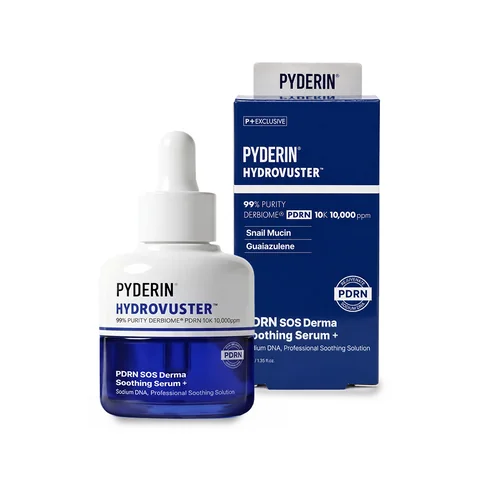 HYDROVUSTER · Partner pharmacies (Korea)
PYDERIN HYDROVUSTER PDRN SOS Derma Soothing Serum
Sodium DNA 100 ppm (0.01%) in the finished product · PDRN raw material at 1%
View product
HYDROVUSTER · Partner pharmacies (Korea)
PYDERIN HYDROVUSTER PDRN SOS Derma Soothing Serum
Sodium DNA 100 ppm (0.01%) in the finished product · PDRN raw material at 1%
View product
-
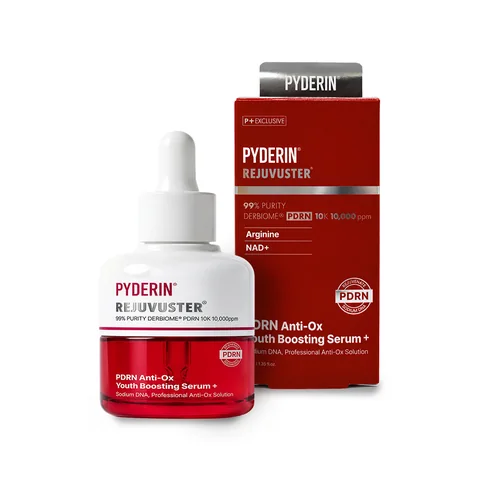 REJUVUSTER · Partner pharmacies (Korea)
PYDERIN REJUVUSTER PDRN Anti-Ox Youth Booster Serum
Sodium DNA 100 ppm (0.01%) in the finished product · PDRN raw material at 1%
View product
REJUVUSTER · Partner pharmacies (Korea)
PYDERIN REJUVUSTER PDRN Anti-Ox Youth Booster Serum
Sodium DNA 100 ppm (0.01%) in the finished product · PDRN raw material at 1%
View product
-
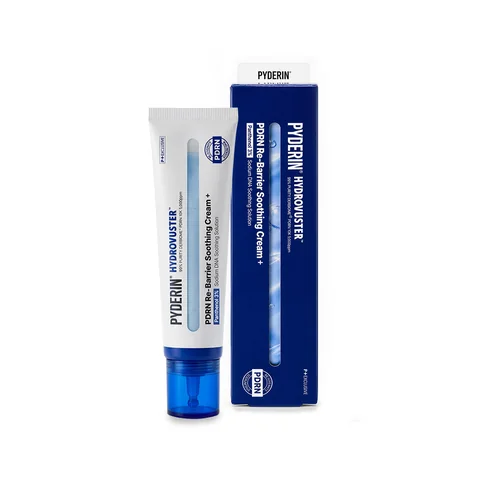 HYDROVUSTER · Partner pharmacies (Korea)
PYDERIN HYDROVUSTER PDRN Re-Barrier Soothing Cream
Sodium DNA 50 ppm (0.005%) in the finished product · PDRN raw material at 0.5%
View product
HYDROVUSTER · Partner pharmacies (Korea)
PYDERIN HYDROVUSTER PDRN Re-Barrier Soothing Cream
Sodium DNA 50 ppm (0.005%) in the finished product · PDRN raw material at 0.5%
View product
Frequently asked questions
Does more PDRN make a better product?
Not necessarily. When the numbers are on the same basis, content is useful information, but a raw-material figure and a finished-product figure cannot be compared, and content alone does not determine how a product feels or what it does. Check what a number is based on before you look at how big it is.
Why doesn’t the word “PDRN” appear on the ingredient list?
It isn’t a labeling mistake. Ingredient lists use standardized ingredient names, so PDRN usually appears as Sodium DNA. PDRN is not an ingredient-list name; it describes the nature of the raw material.
Does “99% purity PDRN” mean the product is 99% PDRN?
No. The number describes how pure the DNA material in the raw material is, which is different from the DNA concentration of the raw-material solution or the proportion of PDRN in the product. The amount in the product is stated separately, in ppm or %.
How is PDRN different from PN?
Both are DNA fragments, usually told apart by size. PN (polynucleotide) generally refers to longer chains and larger molecules than PDRN. On cosmetic ingredient lists, both can appear as Sodium DNA, so you can’t easily tell them apart by name alone. We cover where exactly the size line falls in PDRN, PN and Sodium DNA.
References
These sources cover labeling rules and measurement principles. The raw-material test values come from the certificate of analysis and certificate of origin for PYDERIN’s PDRN raw material.
- Ministry of Food and Drug Safety (MFDS), Korea. 화장품 표시·광고 관리 지침(민원인 안내서) [Guidelines on cosmetic labeling and advertising (guidance for industry)]. 2025 Aug 14. mfds.go.kr
- 화장품법 시행규칙 [별표 4] 화장품 포장의 표시기준 및 표시방법(3. 화장품 제조에 사용된 성분) [Enforcement Rule of the Cosmetics Act, Annex 4: Labeling standards and methods for cosmetic packaging (3. Ingredients used to manufacture the cosmetic)]. Korea Cosmetic Industry Association (KCIA), laws and regulations. kcia.or.kr
- Thermo Fisher Scientific. NanoDrop 2000/2000c Spectrophotometer User Manual. Nucleic acid purity and the 260/280 ratio. thermofisher.com
- QIAGEN. Working with DNA: good laboratory practice. Molecular weight calculation for double-stranded DNA (662 daltons per base pair, as the sodium salt). qiagen.com
- Marques C, Porcello A, Cerrano M, et al. From polydeoxyribonucleotides (PDRNs) to polynucleotides (PNs): bridging the gap between scientific definitions, molecular insights, and clinical applications of multifunctional biomolecules. Biomolecules. 2025;15(1):148. doi:10.3390/biom15010148
This article is general information to help you read cosmetic labels. Check each product’s content and ingredients against the actual packaging and the full ingredient list on its product page.